2012 Single-Hand Nationals Planning Meeting "2"

by Brad
We are making great headway on planning for the 2012 Single-Hand Nationals to be held on June 8th,9th, & 10th. A good outline of all volunteer positions needed to fill has been created.  Lets meet at the WRBC club house this Saturday, (Feb 4) at 10:45am so we can discuss the slots we need to fill as well as your ideas on how to make this a great event.  Please be on time so we can get through several items and then get ready to race... I look forward to seeing you all at the lake this Saturday.

Read More...
AddThis Social Bookmark Button

1973 SINGLE-HANDED NATIONALS

by Pam
I got some new toys for Christmas ... look for more old archive stuff to start appearing on the blog.  Be sure to click on the skipper's meeting photo and look closely at the sail in the background ... 2842 ... my Fighting Lady!  And that big old cup being held by Ray Burke, Jr. has grown and is currently sitting on a shelf right behind me ... 39 years later!


Read More...
AddThis Social Bookmark Button

DOWNWIND - PART 9: BREAKING AN OVERLAP AT THE MARK

(c) 2012 Doug Peckover

In the last article, we looked at how the inside boat at the mark uses its overlap to control the rounding. We also looked at why B is in a better position than A:


In this article, we'll look at two ways for red to break this overlap with B so that no room has to be given. The first is based on the fact that the overlap is established when red is three boat lengths from the bottom mark. In the next diagram on the left, green has an overlap which is determined by the blue line that is the extension of red's transom. The way red breaks this overlap is that red heads up to move this blue line forward of green's bow, as shown:


This has to be done just before red enters the three boat length zone around the mark, and is easy because heading up helps red accelerate and go faster. It's good for red to communicate by saying "we're at 5 boat lengths, now at 4 boat lengths, heading up, no overlap, now at 3 boat lengths, no room!" The onus shifts to green to prove that it has an overlap and rights for room. Very simple, and very effective.

The second way is less common but I love it because it's very intuitive. Just as red is about to enter the three boat lengths circle, red's skipper (the black dot) slides back to look along its transom to see if there is an overlap. Moving back, say, 3 feet pushes red ahead 3 feet for a moment. Red's dialogue would go something like, "we're about to enter the 3 boat lengths, I'm checking to see if there is an overlap... nope, sorry, there's none and you have no room."


This has to be timed just right because this slows red down, but it works again because it shifts the onus onto green plus red has by far the best view of the positions, so it's hard for green to argue with red.

There are many other ways for red to defend against green on the run. We'll look at these in the next article.

Read More...
AddThis Social Bookmark Button

2012 Single-Hand Nationals Planning Meeting

by Brad
Calling all butterflies!  The date is set for June 8-10, start praying now for great weather...Our first planning meeting for the single-hand nationals will be held this Saturday January 21st.  We will meet at the break in-between races at the WRBC for discussion on committees and preliminary planning tasks for the big event.  Please head to the clubhouse for the break and bring your ideas!  See you this weekend.

Read More...
AddThis Social Bookmark Button

1-14-12 RACING

by Pam
It's January.  We had plenty of sun, warm temperatures, and a touch of a breeze.  Doug and I sailed double handed on a Laser and trailed the fleet.  For us, it was a very relaxing, enjoyable sail on a beautiful day.  Just what the doctor ordered.  Most of the fleet was doing the crouching tiger position practicing the fine art of keeping a boat moving in little to no air.  Regardless of the uncomfortable position and the slow motion racing, the weather was just too good not to appreciate. 

Bruce jumped out in front and finished with Bowman in a close second in the first race.  In the second race, it looked like it would be Bruce again but Cathy came up the winner.  Congrats Cathy! 

While sailing around Doug and I decided to take a closer look at the tree that has remained in the middle of our race course for almost two years now.  We noted that it's become a bit of a sandbar and the water around it is getting shallower.  Also, there is about a 4 foot depth where you can sail through the middle of it if you hit it just right.  We gave some thought to how to go about removing it before the Nationals but all ideas came up with a potential injury or breakage of something.  Any ideas?   

Read More...
AddThis Social Bookmark Button

MUSING 8

by Pam
I sent Doug to the lake to sail last weekend so that I could get some stuff done around the house without him under foot.  I thought I had a productive day but then Doug returned.  He was glowing, looked like he’d been on a two week vacation and was talking a mile a minute about everyone and everything.  I was jealous. 

Later Doug asked me why I hadn’t been sailing as much as usual and I absently mindedly blurted out because I hadn’t need it.  And there it was.  Need.  As I contemplated that, I realized that I did indeed need it but had just forgotten.

See, I think if you’re a sailor that the water calls to you.  You go sailing and it somehow fills your needs whatever they are.  Sometimes, it’s thrilling or soothing and calming.  Other times, it’s frustrating and gets you motivated and moving or it’s frustrating and stops your in your tracks.  It seems that the water knows what you need and gives it to you every time.  Conflict, anger, drama, determination, motivation, adrenaline, exhaustion, frustration, community, peace, serenity, clarity, beauty, health, appreciation … it’s all there when you need it. 

Always, the mind and body come away engaged and healthier after some time on the water.  Now, Doug’s explanation will probably be some jibberish about negative ions and neurons lining up.  To each his own. 

Yep.  I want some of that excited, glowy, vacation look.  Hope that’s what’s on tap today.  Come get yours.

Read More...
AddThis Social Bookmark Button

BUTTERFLY SINGLE-HANDED NATIONALS COMING TO DALLAS

by Pam
If you've checked http://www.butterflyer.org/ lately, you'll see that Fleet 20 has been selected as the host for the 2012 Single-Handed Butterfly Nationals.  The date is set for June 8-10, 2012.  Mark your calendars!

Doug and I have been to a few of these Nationals events recently and learned that the class measurer might have some concerns with the way the many of the Fleet 20 sailors rig their boats.  The traveler comes to mind specifically.  Hopefully, over the next few weeks or months, we'll look at the rigging of various boats and determine not only what is class legal but what some of the better sailors have discovered to be the most favorable settings.

Read More...
AddThis Social Bookmark Button

DOWNWIND - PART 8: PASSING AT THE BOTTOM OF THE RUN

(c) 2012 Doug Peckover
You've worked really hard to catch and pass boats going downwind and are now approaching the leeward mark. You're green and have secured the inside position on red and have room at the mark. So far so good. As the green boat, you have a choice: would you rather be ahead of red or behind, as shown in positions A and B?


The competitive nature of most sailors would choose A, but this means that A has to make a seaworthy rounding. In most cases, A will round wide enough for red to sneak in:


As a result, A loses its controlling position, cannot tack, and might even get rolled. And if there are more boats behind, A is in trouble tactically with few options except continuing to the right side of the course until red tacks. Not at all good!

For me the correct answer is always B as shown in this next diagram:


This time, B is in a much better position:
  • Red has to stay on the outside, give room for B jibing, and has to sail a further distance.
  • B does not give up control.
  • B can tack if needed.
  • B is blanketing red who is going slower.
  • If there are boats behind, it's now red that is in trouble tactically.
To get in this position approaching the mark, B might actually have to slow down. This is permitted outside the three boat circle. Inside that, green has to make a seaworthy rounding and cannot slow down.

So, passing near the bottom mark is completely different and is not a good idea. As you approach, you do not want to complete your pass because the other boat can get behind you, take your wind, and then get room from you at the mark. Or at the mark, as we have seen, it can get inside during the rounding.

Things can happen quickly at the mark especially in a fleet, so I like to tell the other boat “I’ve got room coming up.” This is more than just a courtesy – it gives the other boat “room and opportunity” so that it has no excuse for not giving you enough room.

There are ways that red can defend against all of this. We’ll look at these in the next article.

Read More...
AddThis Social Bookmark Button

A message from the new fleet captain, and his first mate…


By Brad
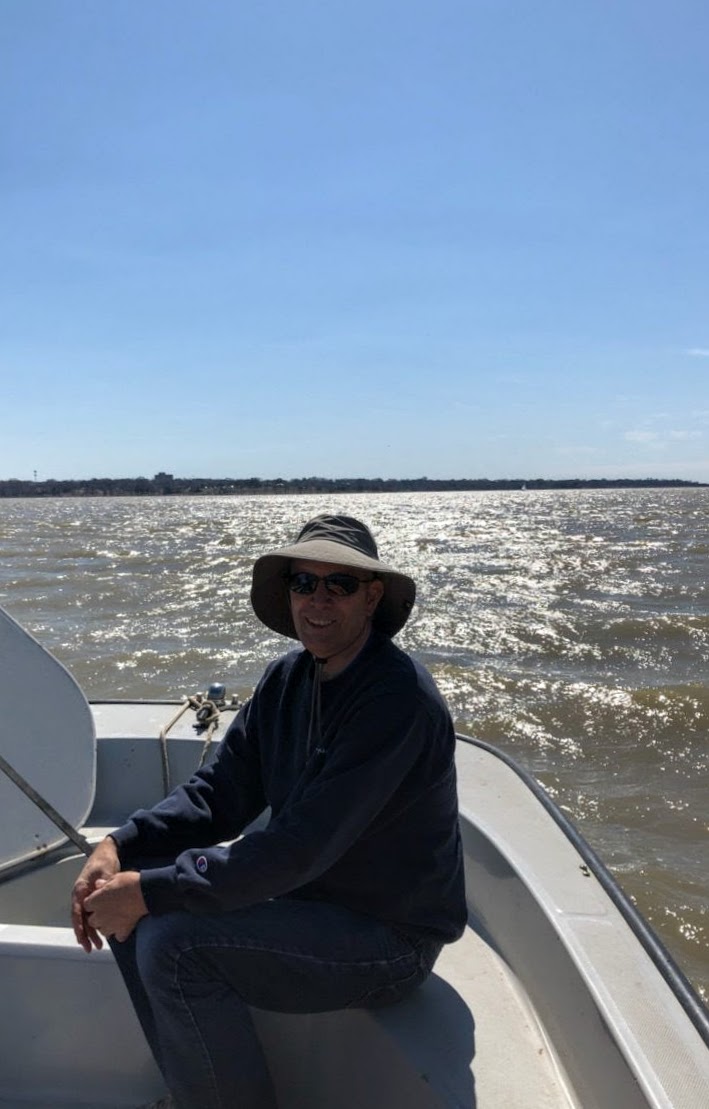
I hope everyone is having a great holiday season with family and friends. As many of you know my wife, Amanda, and I had our baby girl, Molly, on December 10th just in time to have her first Christmas.  It was a wonderful blessing and we could not be happier to be her parents.  I have told Molly that #9509 is hers, and when she starts sailing it I get a brand new one!  We will see if that plan holds true, maybe the old boat can move home for a few years and I can get the new one broken in while she grows up…

  
The weather has been up and down but I know that never stops Fleet 20. Living in this area it is so great to be able to experience some real winter weather and then be sailing the next weekend on a 70 degree winter day.  I have been kind of busy with baby duties on Saturday mornings, but have gotten the green light to sail. Today’s New Years Eve sail was fabulous, even if my fore stay lost a ring ding and my mast came down.  I will be picky on weather reports and try to get the most out of the times I make it to the lake, no under 50 degrees less than 5mph days for me this season.

I am excited about the year to come and honored that the fleet would elect me to be captain for a year.  I have truly enjoyed the past two seasons I have been sailing with Fleet 20 and can honesty say it is some of my favorite times I have had on a boat.

For those who don’t know me yet, the following is brief introduction and how I became involved with Butterfly fleet 20.  I grew up sailing at White Rock Lake with my Grandfather who was a member at CSC form 1972-1998.  He had several different boats, including a Butterfly before my time until he settled on the Flying Scot #566.  He was told by someone at a previous sailing club on the East coast that he was to nice of a person to race boats.  I think he agreed as well and never wanted to mess with all the rules, so he primarily sailed on lazy afternoons with his family.  I stepped foot on his boat around the age of 3 and have great memories of swatting wasps that would live under the bow, sitting on the deck with my hands turning white from the flaking gel coat, and most of all making the boat move with only the power of the wind.  We never really got into the physics or philosophy of sailing back then, we just knew what made the boat go and did it.  I spent a few summers in the junior program at CSC in the opti and then laser, but never really got into racing either.  After an afternoon sail while in high school # 566 began to take on water and sank just of the junior pad at CSC.  My cousin and I bailed it out only to come back from lunch with it full of water again.  With us leaving for collage, my grandfather decided that was enough and donated the boat to the sea scouts.  The boat was never seen again, until several years later, Sunfisher Tony found it in a field with a tree growing in it and fully restored it to racing conditions. It now sits at CSC again, just waiting to be sailed.


Me at CSC in the early 80's
 
On my Grandfather's Scot, with my older brother Scott...


After college my wife and I moved back to the Dallas area and I quickly ound a boat from a coworker.  An O’day Javelin would sit in our driveway for three years and we would spend weekends tailoring it to WRL.  After a weeklong bare boat charter in the BVI’s my wife wanted to learn more about sailing.  We joined CSC and took the beginners class together.  We will never forget when butterflyer Frank wanted to split us up on the first lesson day.  She was kind of intimidated to not have me aboard but Frank assured us it was best for everyone.  We could not have agreed more after the class.  Amanda was so excited to tell me everything she learned on Frank’s Flying Scot that evening and was eager to attend the class for the next month.

BVI's 2009


Enjoying WRL


I had been approached by another butterflyer, Bob, always on the lookout for new members to help serve on race duty.  I said sure and joined him a few Saturdays on butterfly race duty, still never sailing one in my life.  Bob kept telling me I needed to get with Tom to take out a fleet boat and get in a race.  I had picked up the basics from the few race duties I served, so I went for it one Saturday morning.  I had a blast and came back for more the next Saturday, and the next…  After three in a row, fate would have it #9509, a previous national champion winning boat, came up for sale.  A deal that was too good to pass up was offered and I became the proud new owner of two boats!  I sailed the next two seasons with the fleet rarely missing a Saturday.  I have picked up on the basics and advanced my skill level.  I still do not take the competition as serious as many; I just enjoy when I can improve from previous mistakes, and actually understand how the boat responds to different adjustments.  Any time I am on the lake is a joy for me.

 
#9509

I have developed a life long passion for White Rock Lake and also have the great fortune to be involved with planning and design of amenities at the lake.  I work as a Landscape Architect for a large interdisciplinary firm in Dallas.  We are currently working with the City of Dallas on several projects around the lake, including the dog park renovation and trail expansion on the east side.  I thoroughly enjoy working and playing at WRL.

As I said previously, I really look forward to this year as it looks to be a special one for the fleet.  We are currently finalizing a date to hold the Butterfly Single Hand Nationals once again at White Rock Lake.  Details should be complete soon, NOR and SOI’s will be posted in the appropriate locations.  It is my goal to enjoy another great year together and advance the local fleet as well as the butterfly class. 

Happy Holidays and have a great New Year!

Brad   

Read More...
AddThis Social Bookmark Button

T-BALL AND SAILING

by Pam
One out, runners on first and second. The batter waits with baited anticipation. The umpire places the ball on the tee; the pitcher makes a throwing motion, and the batter swings with all of his might. The ball flies between the shortstop and third baseman, hits the ground on the edge of the dirt and rolls into the outfield grass between two five year old outfielders who watch the ball pass by before realizing they need to give chase. The runners take off as the crowd yells with excitement. The runner from second scores with ease. The runner on first stops at second and smiles. His coaches and fans yell for him to run and he takes off for third. By this time, the two outfielders have fallen down, and begun wrestling for the ball. Finally, the left fielder comes up with the ball and heaves the ball toward the infield. The ball doesn't make it to the dirt and the shortstop runs to the ball. The batter has reached first and is headed for second. The runner who started on first, stops at third and smiles. By this point his coach is red-faced and about to pass out from a lack of oxygen as he "encourages" the five year old to head home. He takes off for home. The shortstop throws the ball toward home. The batter stops on second base and raises his hands to the sky in triumph. The ball hits the dirt and rolls right to the catcher at home plate. The runner heading home sees the ball, turns around and runs safely to third base. Time is called.  (read more)


I read this and laughed out loud.  On the face of it, this has nothing to do with sailing ... or does it?

How cool is Facebook?  I re-connected with my old friend, playmate and neighbor of 18 years.  When he was Speed Racer, I was Trixie and when he was Batman, I was Batgirl and on and on the adventures went for years and years.  Great memories!  Low and behold, I find that after all these years, we’ve both been blogging about sportsmanship.

These days he’s into the ball sports and I’m into the water sports but our observations are strikingly similar.  Reading his post made me realize that bad sportsmanship appears to actually be a simple loss of perspective.  Could it really be that basic?

Ben Ainslie, a three time Olympic Gold Medalist, recently exited his boat and boarded a media boat at the Finn World Championships in Perth, Australia to speak his mind about the boat’s interference in his race  (Ainslie disqualified; photos).  Ultimately, he forfeited a World Championship win that was easily his for the taking.  Perspective.  He was right but he was also wrong.  The media boat was doing its job (although, it could be argued, unsafely).  Is Ben a bad sport?  Doubtful.  He just lost his perspective for a brief moment.  It happens to us all.  So perhaps bad sportsmanship is a persistent loss of perspective. 

I am going to put watching five year old t-ball on my list of things to do next time I lose my perspective and need a little reality check on what’s really important.

Read More...
AddThis Social Bookmark Button

DOWNWIND - PART 7: PLAYING THE PUFF

(c) 2011 Doug Peckover
Everyone knows in lake sailing how important it is to sail in the puffs where there is more pressure. But few people understand the importance of sailing in the correct part of a puff. Sailing by the lee gives you the lateral options of sailing in any direction to position yourself for an oncoming puff. But what part of the puff do you want to catch?

To learn more, you need to stand on pavement with three glasses of water:
  • The first glass you just pour out, and the splatter pattern is shown on the left.
  • The second you throw at an angle, and the pattern is spread out as shown in the middle.
  • The third you throw at an angle as hard as you can, and the pattern is longer and straighter as shown on the right.

The wind is also a fluid and does the same thing. At altitude it’s moving really fast. But as it gets lower, it slows down. And when it hits the water, it could have lost all of its speed and come straight down, it could have a little speed, or it could still have lots of speed:
  • The pattern above on the left is for a very light breeze and explains why it can be so frustratingly shifty with the wind coming from any direction.
  • The pattern in the middle is for a medium breeze and shows that the wind blows generally from the same direction, so there are not as many shifts.
  • The pattern on the right is for a strong breeze where the wind direction is the steadiest.
This makes a lot of sense because the stronger the breeze, the more the momentum, and the more the momentum, the less likely the direction is going to change. It’s like riding a bike – the faster you go, the harder it is to change direction. The opposite is also true – a light breeze is almost always shiftier, as shown by the wind speed and direction at the CSC weather station:


When the wind is under 5, the wind direction is all over the place, and when the wind is over 5, the direction is mainly from the south. As a rule, the stronger the wind, the steadier the wind direction.

The last downwind article was about how to position yourself for the best puffs, and the article before that was how to catch shifts downwind while sailing by the lee. Understanding the shape of puffs allows us to put this all together to get the best of all conditions: (1) sailing in a puff for the extra pressure (2) by the lee so it’s efficient like on a reach (3) going straight downwind towards the bottom mark. It starts by facing the puff sailing by the lee at the edge of a puff where there angles are the best:
  • In light air, let the sail way out and head for the mark, as shown on the left in the next diagram. This makes sense because your boat is most stable when the wind is light.
  • In medium air the angles are smaller, so pull the sail in a little as shown in the middle diagram, but still head for the mark. Pulling the sail in also makes sense because your boat will be less stable.
  • In heavy air, pull the sail in more and bear off to sail by the lee. This also makes sense because your boat is the least stable, plus you want to be able to carve back and forth to catch waves.
In all three, you’re sailing by the lee which is faster as described in a previous article. If the wind picks up, you pull in the sail which also helps make things more stable:


Note that the stronger the breeze, the wider the puff (not shown in these diagrams). So when it’s really windy it may be hard to even recognize the different patterns on the water. With lake sailing, the wind strength and direction is always changing, so remember to always play your main angle and boat direction to get the most lift, not drag, from your sail. Here’s your checklist:
  1. Where: watch for the puffs and position yourself on the outside of the puff sailing by the lee. This is easy in lighter air and more difficult as it gets windier.
  2. How: in lighter air, have the sail way out and head for the mark as much as possible, but sailing by the lee for speed is more important than your direction.
  3. When: as the wind picks up and things become unstable, bring the sail in as needed.
  4. Why: constantly play your sail and steer with your weight to get the feeling and keep in touch with what makes your boat feel the fastest.
For me, the most important word is “feeling” and the orchestra of feelings can be overwhelming. But with practice, you’ll learn to feel what works and what does not. And with this comes the speed needed to catch and pass other boats.

But be careful – passing at the bottom of the run may not be a good idea. In fact, you might easily give away all that you have worked so hard to gain. How you protect against this is counterintuitive and the subject of our next article.

Read More...
AddThis Social Bookmark Button

TIDBITS

Our new fleet captain, Brad, is taking his job seriously and has joined Shaun in the business of manufacturing future Butterflyers.  This model, arriving on Saturday, was a healthy, beautiful girl.  Congratulations!!  Keep 'em coming. 

For those who haven't found it, there is a very cool website, www.marinetraffic.com that is worth checking out.  Doug and I sat at home and could see what boats were currently going through the Panama Canal and which boats were piled up on either end waiting for their turn.  Doug noted that a freighter was about to enter Sydney harbor and then he logged on to the local web cam and within a few minutes was able to see the freighter enter the harbor.  Very cool site!

The ongoing downwind series will soon resume.

Read More...
AddThis Social Bookmark Button

2011 ANNUAL AWARDS

Congratulations to our trophy winners:

2011 Butterflyer of the Year - Frank

Winter Series - Bruce, Frank, Burton / Pam
Spring Series - Sandy, Burton, Bruce / Pam
Summer Series - Frank, Bruce, Sandy / Catherine
Fall Series - Bruce, Frank, Sandy / Catherine

New Fleet Captain - Brad

Read More...
AddThis Social Bookmark Button

OUR INTERNET TRAFFIC

Our geographical stats counter was reset at the end of last year.  This is our internet traffic from the past year.

Read More...
AddThis Social Bookmark Button

TAKE NOTE

The annual meeting/awards ceremony/Christmas party is this Friday evening. 

We switch to winter hours this Saturday and the first gun is at noon.

Read More...
AddThis Social Bookmark Button